

We are seasoned experts in marine appraisal and valuation, specializing in the accurate assessment of ships and all types of marine vessels. Located in Cebu, we provide reliable and comprehensive valuation services tailored to meet the needs of our clients in the maritime industry.
Email us: [email protected]
Call us: +63.917.553.2211
Appraisal analysis of marine and offshore assets is a complex but vitally important task for any organization involved in asset financing, acquisition and/or operation. Such appraisals require careful analysis of the technical details, condition of the asset as well as a review of the asset’s operating market in order to be able to react to changing market conditions, technology development and new regulations adopted by the asset’s Flag State. A proper appraisal analysis requires not only a thorough knowledge of the technical aspects of an asset, but also a good understanding of the market and insight as to new regulations and their implementation status.
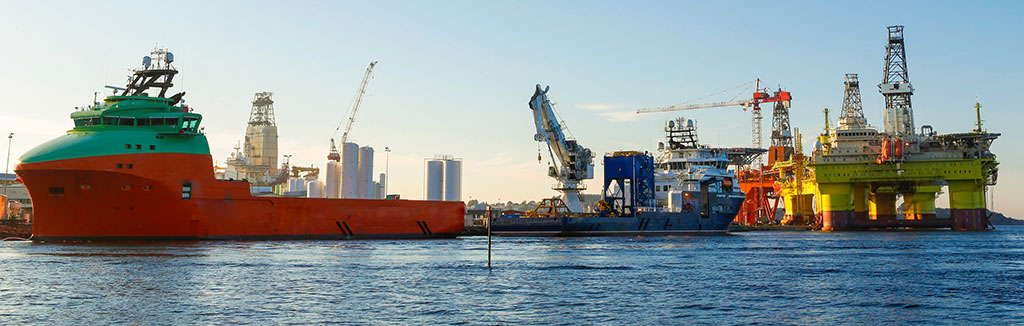
An appraisal report that is intended to comply with the reporting requirements set forth under the PHILIPPINE VALUATION STANDARD for an Appraisal Report should consider three standard appraisal methodologies: (1) the Sales Comparison Approach, (2) the Income Approach and (3) the Cost Approach.
Sales Comparison Approach
Application of the Sales Comparison Approach requires that an effort is made to base an investment decision on the sale of identical assets exchanged in the marketplace. In the marine and offshore industries, it is rare to find sales of units identical to the subject asset/property. In such a scenario, the appraiser will obtain details from sales transactions of assets that are similar but not identical, and the selling prices of these comparable assets are then adjusted to account for the characteristics of the subject property under appraisal.
Income Approach
The theory that underlies the Income Approach is that an investment decision is based on the present value of the future benefits to be earned by the investment, and the value of a particular asset is represented by the present value of its expected future benefits. Two techniques are generally used to value machinery and equipment by this approach. One is the Direct Capitalization Approach which measures value by dividing a projected income stream, in constant dollars, by a capitalization rate. The second method is the Discounted Cash Flow (DCF) Approach. The DCF Approach is a method of analysis in which the quantity, variability, timing, duration of periodic income and residual value are projected and discounted to a present value using a discount rate.
In case the subject asset has a long term charter contract in place, an appraisal analysis performed for the subject asset should be consistent with the terms, conditions and encumbrances of this contract. An important product of the asset’s contract is a stable and guaranteed revenue stream, provided of course that the asset remains operational. However, in case the asset does not have a charter contract in place, it is not possible to use an income-based approach.
Cost Approach
The Cost Approach considers the current replacement cost as new of the subject property being appraised and then deducts for the loss in value caused by all forms of depreciation, including physical deterioration, functional obsolescence and economic obsolescence. The logic of this approach is the principle of substitution; a prudent buyer will not pay more for a property than the cost of acquiring a substitute property of an equivalent utility. A major challenge in the application of the Cost Approach for marine and offshore assets is quantifying physical, technological and economic depreciation. Changes in market condition, asset’s condition, technological advancements and changing regulations all have a potential impact on this valuation method and will need to be quantified for the development of replacement cost.
All three approaches to value an asset must be analyzed for application to a specific assignment. After completion of a valuation analysis, one of these approaches, or a weighted combination of more than one, will be selected as being most suitable for determination of the final value conclusions.
Supporting the Appraisal Process
Marine and offshore appraisals require an in-depth understanding of the technical and commercial aspects of the asset and the markets in which it operates. ValueStrat’s appraisers are Legally Registered Accredited Appraisers.